








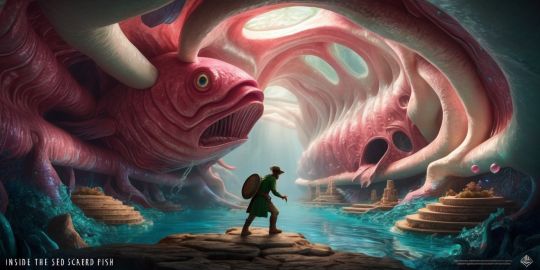
Lord Jabu-Jabu’s Belly within The Legend of Zelda: Ocarina of Time turns a familiar adventure into something far stranger, shifting the play space from forests and rivers into the living interior of a giant sacred fish. As the third major dungeon, it arrives with a different mood, a more vertical layout, and a fresh puzzle rhythm built around carrying Princess Ruto, manipulating switches, and learning how the newly acquired Boomerang changes combat and navigation. The dungeon is memorable not just because of its distinctive setting, but also for how closely its obstacles are tied to its theme, making every corridor feel like a part of a breathing, pulsing organism rather than a conventional stone labyrinth.
Entering a living labyrinth
The opening moments set the tone immediately. Once the fish draws Link inside, the dungeon asks for quick awareness and a bit of patience. The first room introduces water, ceiling switches, and enemies that appear from unexpected angles, while the path forward feels narrow and organic rather than cleanly built. Early movement is simple but important, since the layout teaches the player to watch overhead structures and use the Slingshot with precision. The environment does not behave like a castle or a cave; it feels moist, shifting, and slightly unstable. That distinct feeling is part of what makes the dungeon stand apart in memory, because every step suggests that the whole structure is alive and reacting.
First contact with the aquatic hazards
The opening corridor also establishes the dungeon’s combat identity through small enemies that test basic control. Octoroks appear from the surrounding water, forcing the player to swap between exploration and quick aiming. In some versions of the game, floating bubbles add another layer of pressure early on, giving the room a more chaotic rhythm. These threats are not difficult on their own, but they serve a useful purpose by reminding the player that this dungeon favors alert positioning and quick reactions. The switch near the ceiling becomes the first meaningful environmental puzzle, and opening the next door feels less like solving a major riddle and more like learning the body language of the dungeon itself. That sense of learning the space matters throughout the entire crawl.
Meeting Ruto inside the fish
Princess Ruto arrives as the dungeon’s most important companion and also its most unusual mechanic. After speaking with her, the player must keep track of her movement, place her down when needed, and carry her through sections that would otherwise be impossible to navigate efficiently. Her presence changes the pace of the dungeon in an immediate way because the player is no longer moving alone. Instead, every route must consider where to set her, when to leave her behind briefly, and how to return without taking unnecessary damage. The relationship is playful but demanding. Ruto’s complaints, her confidence, and her insistence on finding a missing stone make the dungeon feel more character-driven than many earlier areas in the game.
Raising and lowering the water path
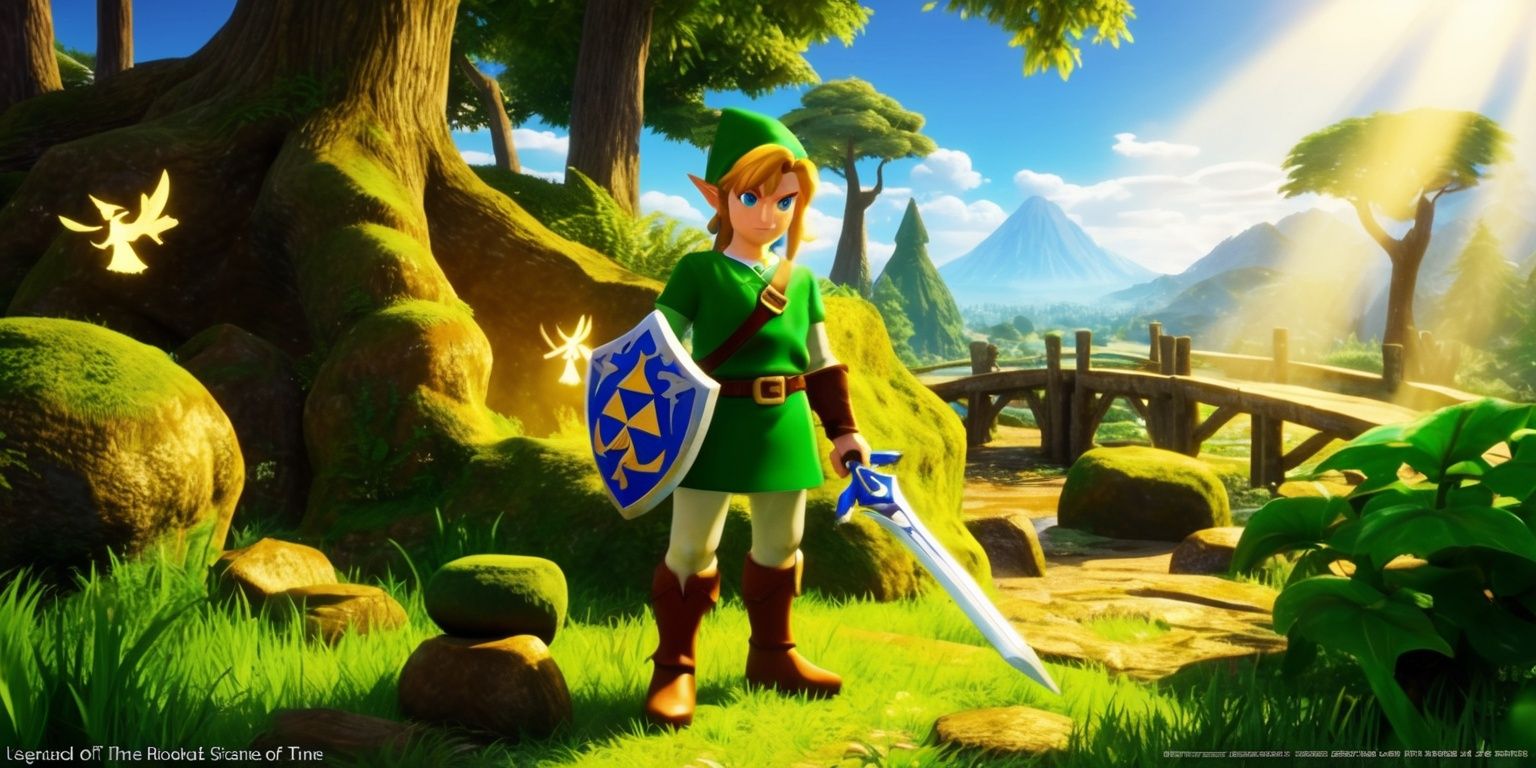
One of the most important mechanics in Lord Jabu-Jabu’s Belly is the changing water level. The dungeon uses floor switches to move between shallow and deeper states, creating a puzzle loop that repeatedly opens and closes routes. This system gives the interior a layered structure, because one room can function differently depending on the water height. At one moment the player is walking with Ruto, and at another they are swimming to a chest or reaching a raised ledge. That back-and-forth motion gives the dungeon a deliberate tempo. It also encourages observation, since the player has to notice which platforms become useful only after a switch is activated. The outcome is a sequence of interlinked chambers that feel compact yet surprisingly flexible.
Finding the map and understanding the layout
Collecting the dungeon map is an early reward that helps clarify the structure of the area. It arrives after a sequence of drops, small enemy encounters, and a water-level shift that opens up deeper sections of the chamber. The map is especially valuable here because the dungeon can feel disorienting at first, with overlapping rooms, branching tendrils, and multiple paths tied to different colors. Once the map is in hand, the player can read the space more confidently and start recognizing how the dungeon loops back on itself. The design is compact, but it is not simple. Several routes are hidden behind platform changes, and the map makes the stomach-like interior easier to interpret as a connected system rather than a random maze.
The search for the Business Scrub
Before the right tools are obtained, the dungeon briefly opens into an offbeat encounter with a Business Scrub. Reaching this area requires using water shifts, cross-room movement, and careful positioning with Ruto. The room acts like a small detour from the main objective, but it still plays a role in the dungeon’s progression by reinforcing that the environment is full of unexpected pockets and side spaces. The Business Scrub encounter also brings a touch of character to the dungeon, since not every inhabited space in this fish body is hostile. Some rooms feel almost like strange shops hidden in the folds of anatomy. This helps break up the tension and gives the player a brief sense that the dungeon has its own ecosystem beyond combat and puzzle solving.
Securing the Boomerang
The Boomerang is the dungeon’s signature reward, and obtaining it changes nearly everything that comes afterward. The route to it runs through a tricky sequence of moving around poisonous floor patterns, avoiding unsafe purple patches, and watching for Bari and other jelly-like threats. Once inside the room where the chest appears, the player has to defeat enemies before claiming the prize, after which the pace of the whole dungeon changes. The Boomerang is more than a new weapon; it serves as the key that opens everything that follows of the area. It can stun enemies, activate switches from a distance, and target vulnerable points on larger foes. In practical terms, it transforms the dungeon from a navigation challenge into a tactical one.
Cutting through the parasite routes
Three major tentacles block progress, and each one introduces its own movement pattern and attack style. The pink version hangs in a room where getting too close is risky, while the blue one is faster and more aggressive, and the yellow one adds haste and additional enemy pressure. The player must follow corresponding colored tendrils in the ceiling, leave Ruto in safe spots, and use the Boomerang to strike the weak link in each creature’s body. The fights are not simply about standing still and trading hits. They demand timing, awareness of the room’s edges, and patience while waiting for safe attack windows. Each parasite feels like a disturbance inside the dungeon’s body, and removing them gradually stabilizes the route forward.
Clearing the side chambers
Between the tentacle battles, the dungeon offers smaller side rooms that expand the sense of place and reward exploration. One such chamber is guarded by a cluster of floating enemies, and it opens only after the player manages the space carefully and clears the room methodically. Inside, a chest appears with the Compass, another practical tool that helps track the dungeon’s progression. These side chambers do not always advance the main path immediately, but they enrich the overall structure. They also help the dungeon avoid feeling like a straight sequence of boss gates. Instead, it becomes a network of optional-looking spaces that often contain essential rewards, pushing the player to investigate every branch rather than rush forward blindly.
The drifting challenge of the mini-boss
The mini-boss encounter with Big Octo gives the dungeon one of its most memorable set pieces. The creature moves unpredictably, and the player must circle the arena while using the Boomerang to target its exposed weak point. As the weak point grows more vulnerable, the fight becomes more intense, and the arena itself starts to feel like a moving puzzle. The battle also introduces a chase rhythm, since the player has to keep pace with the creature and avoid getting trapped while smaller threats appear around the edges. This encounter is useful because it asks the player to apply everything the dungeon has taught so far: distance control, quick targeting, and awareness of the environment. It is both a combat test and a movement test.
Reading the dungeon’s visual language
Part of what makes Lord Jabu-Jabu’s Belly so distinctive is its visual direction. The walls curve like tissue, the floors shift between organic surfaces and raised platforms, and the ceiling tendrils act like visual markers that guide the player from one objective to another. Even when the dungeon is confusing, its color coding helps make sense of the route. Pink, blue, and yellow paths correspond with specific rooms and challenges, giving the entire structure a readable logic. The imagery is intentionally strange, but it is also functional. Every detail reinforces the impression that the player is moving through a living body. That aesthetic choice is not just memorable; it actively supports the gameplay by turning the dungeon into a place where the environment itself communicates direction.
Reaching the final approach to Barinade
The last stretch of the dungeon blends movement, jumping across platforms and working through puzzles in a manner that feels like a final exam for the area’s mechanics. The player must manipulate blocks, climb vines, use the Boomerang on ceiling switches, and reposition Ruto at the right moments to keep the path open. Even the transition spaces feel important here, since they connect the organic rooms to the boss arena while still preserving the uneasy mood of the dungeon. By the time the final door opens, the player has already learned how to read the interior as a layered structure, deal with its hostile organisms, and use the new weapon with confidence. The boss room waits at the end of that progression, set behind the last sequence of moving parts and carefully timed enemy clears.
Combat rhythm and dungeon functionality
The dungeon works especially well because its mechanics stay tightly connected to its theme. Combat is rarely separated from movement, and movement is rarely separated from puzzle solving. Whether the player is dealing with a ceiling switch, repositioning Ruto, or choosing when to attack a tentacle, the experience remains focused on layered interaction. The Boomerang is a perfect example of this design approach, since it is useful in direct fights and in environmental manipulation. The same is true of the water-level switch system, which can convert a room from a corridor into a swimming zone in moments. Lord Jabu-Jabu’s Belly feels functionally elegant even while it looks bizarre, and that balance is what gives the dungeon its lasting appeal.